Three
Elevation and Climate
 By Frank A. Figueroa
Three
By Frank A. Figueroa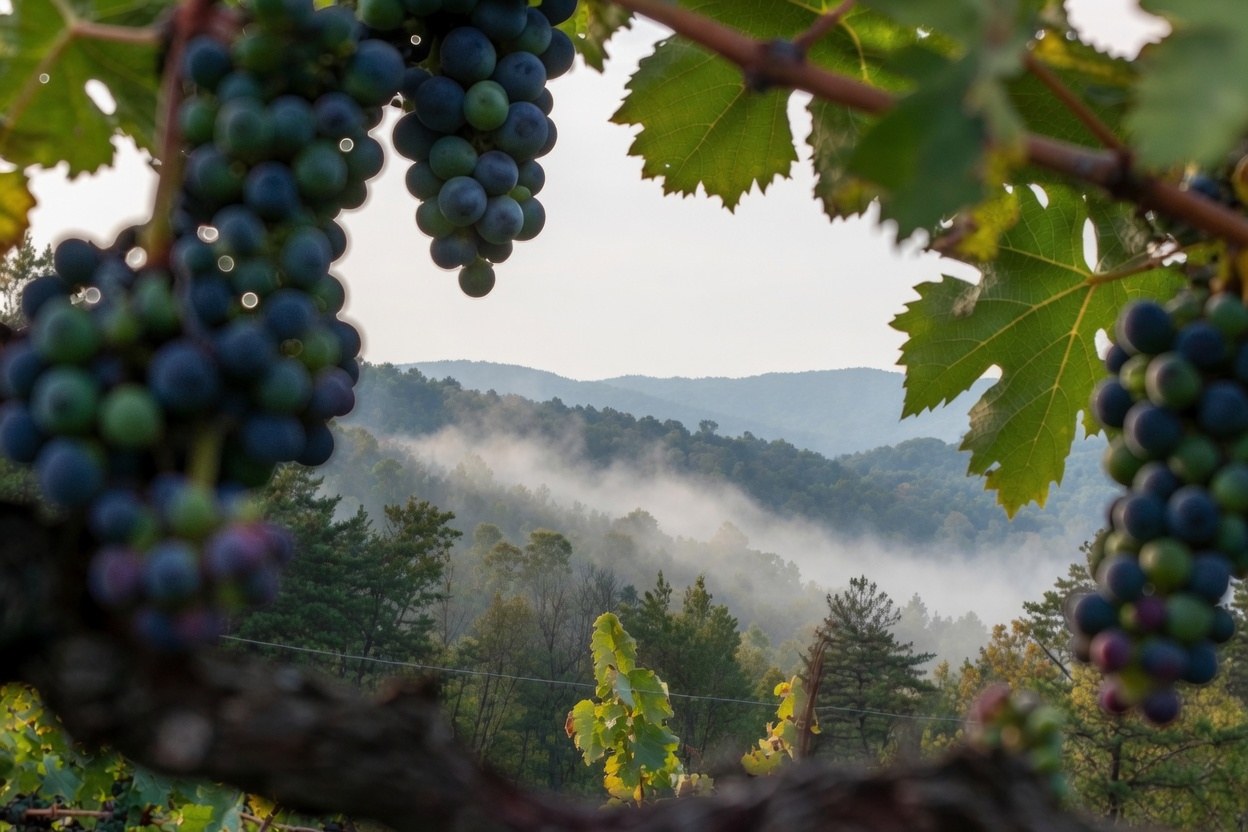
In these mountains, elevation is not a side note. It is one of the things that makes the wine.
As the ground rises, the air cools. The nights get colder. The gap between the heat of the day and the chill of the night, what growers call the diurnal range, gets wider. A few hundred feet does not look like much on a map. It changes the fruit from flowering to harvest. Sugar comes on more slowly. Acidity holds. The wines tend to stay bright instead of going soft.
Growers on the higher slopes watch aspect, the direction a block faces, and the small difference in height from one block to the next. A few hundred feet can move the harvest. Fog in the hollows burns off and delays the heat. A breeze along the ridge keeps the vines drier and eases disease. After enough seasons, those patterns are how a person knows a site.
Cooler nights and a measured day protect the acidity in the grape. Acidity is what keeps a wine fresh and gives it a spine. When it stays in balance with the fruit, the wine feels lively. That is a fair description of the better bottles from the higher ground here.
The soils work with the weather. Much of this country drains well, formed from the rock under it, and often carries a mineral note. With the height, the vine has to look for water and feed. The wine that follows is often restrained. The fruit is there. It does not take the whole glass.
None of this guarantees a good bottle. Height and weather only open a set of chances. What happens in the vineyard and the cellar decides whether those chances are taken. The cool nights, the air on the ridges, the change from one slope to the next: these are conditions to be learned, not problems to be engineered away.
At its best, the wine does not borrow the manner of a warmer, flatter place. It takes the limits of higher ground, and the gifts, and works inside them. The next note is the people who farm this land.
In this series
The work in these mountains is easy to miss if you pass through quickly. The season is short, the air is wet, and the better bottles keep a brightness the nights make possible.
The high country is larger than the appellation that carries its name. Neighboring sites share the same mountain character. They simply fall past a line drawn for a label.
Every vineyard in this high country began with a decision to farm the slope as it is.
Hybrids are a response to this climate, not a lesser grape. The decision to plant them is a matching of vine to ground.
Most people who visit a tasting room here eventually notice the medals. A medal is a judgment of one bottle, on one day.
The high country does not hurry. Food, hospitality, and the pace of the day belong to it as much as the vines do.