Four
The Growers of the High Country
 By Frank A. Figueroa
Four
By Frank A. Figueroa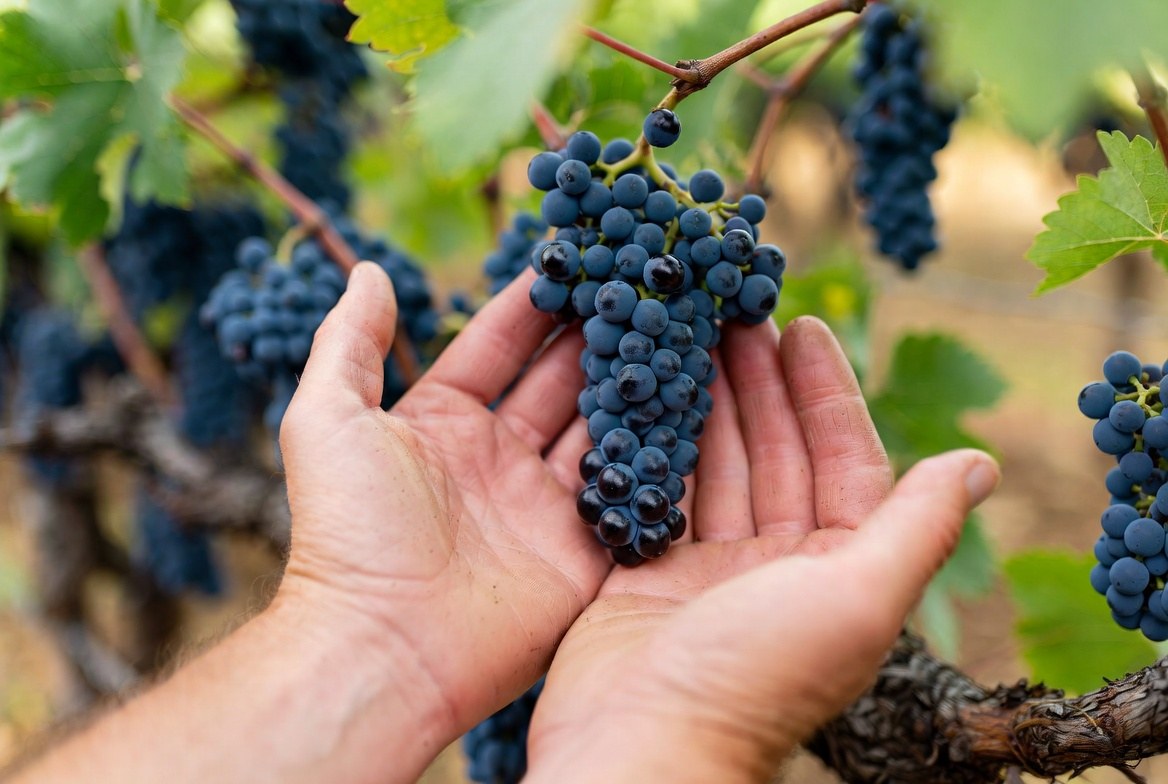
Every vineyard in this high country began with a decision to farm the slope as it is.
The people who plant these ridges are not following a plan written for another valley. Some come from families who have known these mountains a long time. Others came later, for the ground and for work they could do with their hands. They share a willingness to take the height, the uneven seasons, and the slower pace this country asks.
Grapes at this altitude are exacting. The same nights that keep a wine bright also ask a person to be there. Spring frost can hang on. Summer rain can come hard, or not come. The day to pick is rarely obvious. People who stay learn to read the vines the way you read anything you cannot afford to miss.
Most of the vineyards stay small. The terrain makes large blocks awkward, and a smaller block lets a grower decide about the pruning, the canopy, and which fruit is ready. The work is physical, detailed, and often done alone. It rewards patience and a steadiness that does not need an audience.
After time on these sites, what shows is how seriously the labor is taken. There is little interest in display. The talk stays on the vines, the season, and the piece of ground underfoot. Growers speak of the land with realism and regard at once. They know what it withholds. They know what it gives. That knowledge is in the farming, and it is in the wine.
The high country does not make the work easy. It makes the work specific. People who last here adjust the ambition to the place, rather than asking the place to become some other region. You can see it in rows that follow the contour. You can taste it in the better bottles, which stay clear and do not push.
North Georgia Wine Country rests on that work: daily, seasonal, and carried across years by people who chose these ridges. The next note is the vines that meet this climate, and the work of hybrids.
In this series
The work in these mountains is easy to miss if you pass through quickly. The season is short, the air is wet, and the better bottles keep a brightness the nights make possible.
The high country is larger than the appellation that carries its name. Neighboring sites share the same mountain character. They simply fall past a line drawn for a label.
In these mountains, elevation is not a side note. It is one of the things that makes the wine.
Hybrids are a response to this climate, not a lesser grape. The decision to plant them is a matching of vine to ground.
Most people who visit a tasting room here eventually notice the medals. A medal is a judgment of one bottle, on one day.
The high country does not hurry. Food, hospitality, and the pace of the day belong to it as much as the vines do.