Six
What the Medals Represent
 By Frank A. Figueroa
Six
By Frank A. Figueroa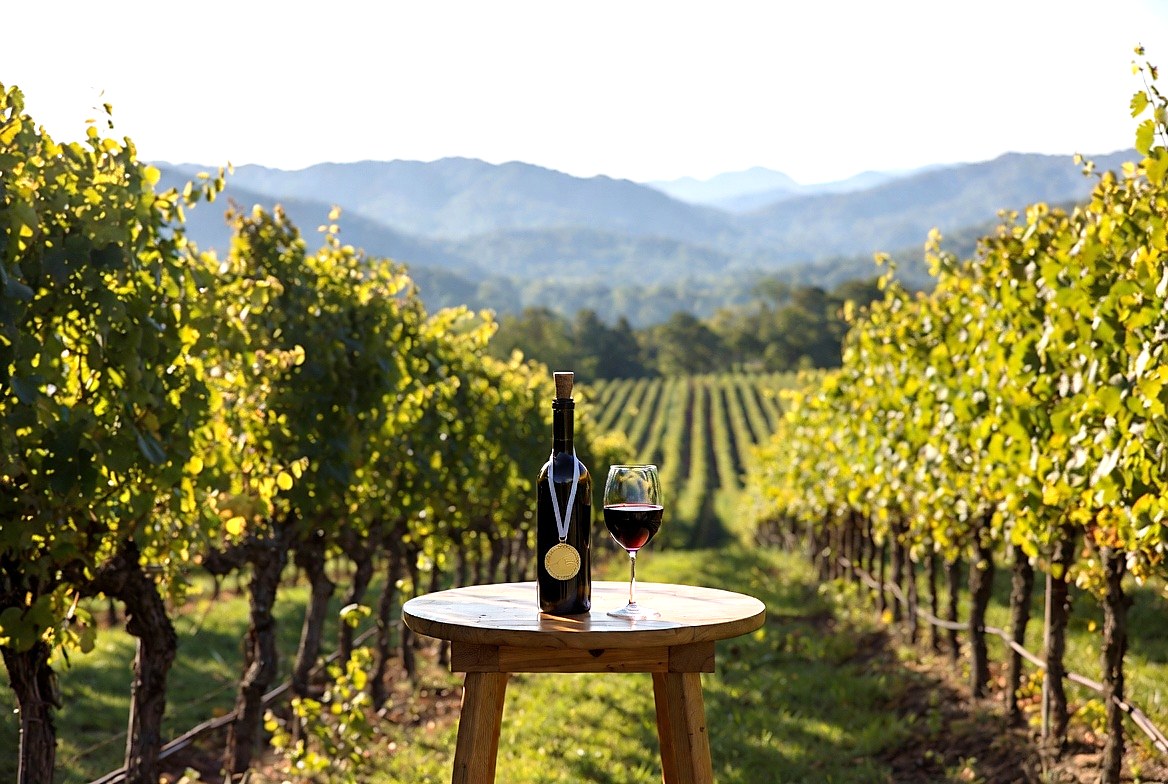
Most people who visit a tasting room here eventually notice the medals. They hang on the neck of a bottle, sit on a small card, or wait in a frame near the bar. A gold medallion, a silver ribbon, sometimes a certificate. They are earned in competition. A medal is a judgment of one bottle, on one day. It is not the whole story of the place.
In a serious competition the wines are tasted blind. The judges do not know the producer, the price, or the story. Entries are grouped by category, by grape, by style, sometimes by region, and tasted for balance, clarity, and character. Some events are national or international and draw a great many bottles. Others stay with the East, the Southeast, or a particular kind of wine. Hybrids often have their own classes, so a Chambourcin or a Traminette is judged as itself, not as a failed copy of another grape.
When a wine from this high country takes a medal, that bottle did well against the field it was entered in. The fruit was clean. The making was careful. The wine met a standard on the day it was judged. Much of the best work here is still sold in the tasting room, to people who came for the country as well as the glass. A medal is one of the few public marks that work receives. It is not the only measure. It is a real one.
The mark also points back to the ground. There is good farming here, and a number of vineyards make clean wine from it. Elevation, the choice of site, and the patience of a hard season are in the bottle, whether the grape is a hybrid chosen for a humid summer or a European vine matched to a slope that will have it. Where to plant, how to handle the canopy, when to pick: those decisions were made years before the ribbon. The medal is the visible end of that work.
Awarded wines come from inside the appellations and from the high country past those lines. A medal belongs to a vintage and to the work behind that bottle.
Not every good wine is entered. Some producers pick their competitions. Others put their time into the tasting room and the people who walk in. No medal does not mean no quality. A medal means the wine was set against a wider field and held. At this scale, with a market that is still mostly regional, that counts.
The next note is the character of the high country itself: the food, the welcome, and the pace of the day.
In this series
The work in these mountains is easy to miss if you pass through quickly. The season is short, the air is wet, and the better bottles keep a brightness the nights make possible.
The high country is larger than the appellation that carries its name. Neighboring sites share the same mountain character. They simply fall past a line drawn for a label.
In these mountains, elevation is not a side note. It is one of the things that makes the wine.
Every vineyard in this high country began with a decision to farm the slope as it is.
Hybrids are a response to this climate, not a lesser grape. The decision to plant them is a matching of vine to ground.
The high country does not hurry. Food, hospitality, and the pace of the day belong to it as much as the vines do.